Salt air, sea freight and service charges: a practical look at what keeping a home in the Maldives involves, from management models and maintenance to letting rules, insurance and currency.
The purchase price is the number everyone looks at first. For a home in the Maldives, it is not the number that determines whether ownership is a pleasure or a burden. That depends on what the home costs to run, who looks after it while you are away, and how the realities of an island nation in the middle of the Indian Ocean affect both. This guide is about those realities, presented plainly and without promises.
If you have not yet read our explainer on Maldives property ownership rules, start there, because the structure you buy into largely determines how management works. And if you want a second pair of eyes on the numbers for a particular project, our Maldives property services include a cost review before you commit.
Why island ownership costs more to run
The Maldives imports most of what it uses: building materials, furniture, appliances, fuel and much of its food. Everything arrives by sea or air, then travels on again by boat to individual islands. That logistics chain adds cost and time to every repair and every replacement. Power on many islands comes from diesel generation, increasingly supplemented by solar. Fresh water usually comes from desalination. All of this is reflected, one way or another, in the charges an owner pays.
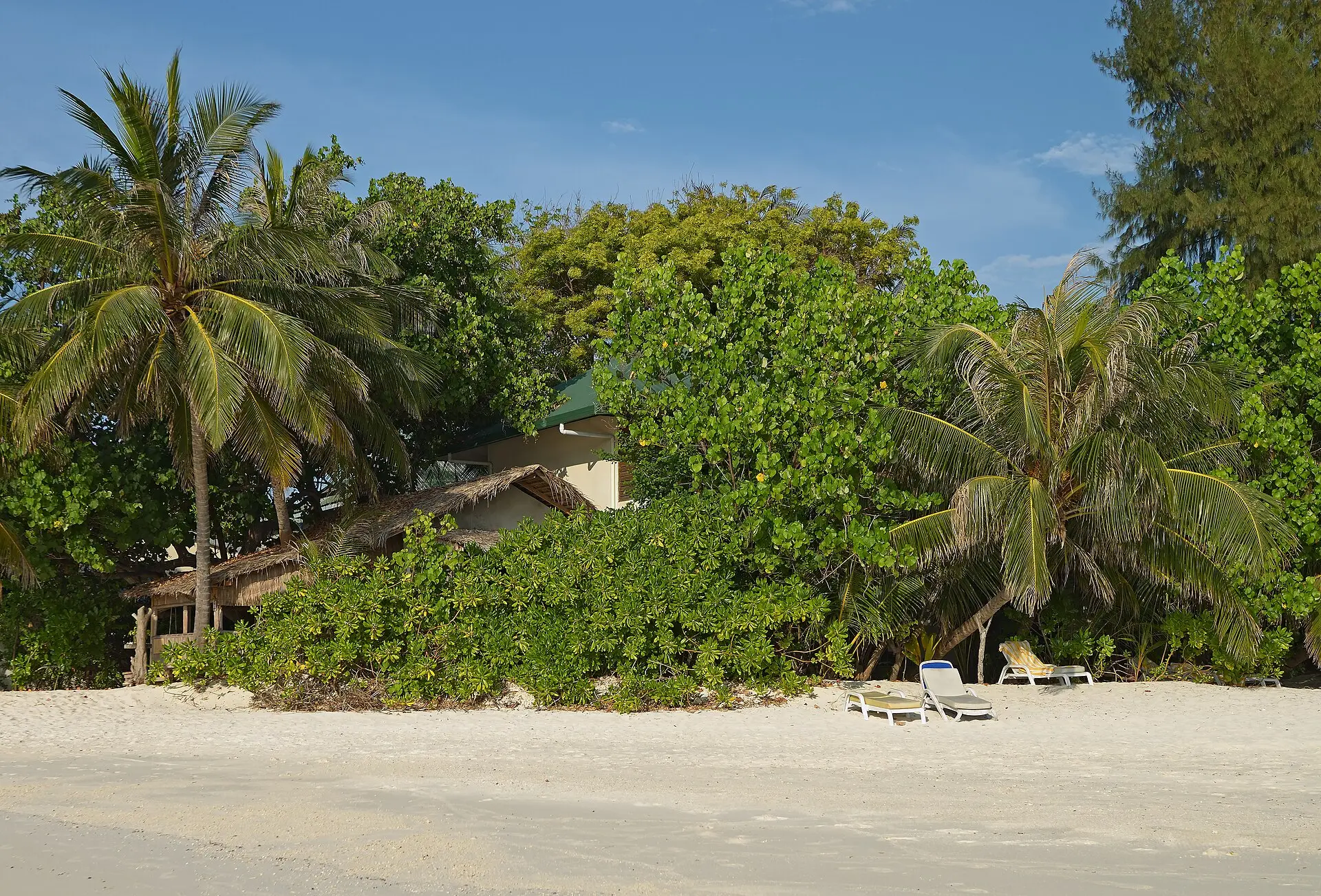
Climate is the other factor. Warm, humid, salty air is beautiful to sit in and relentless on buildings. Metal fixings corrode, timber needs treatment, air-conditioning units work hard, and fabrics fade. A home that is not maintained deteriorates quickly.

The main cost categories
Exact figures depend entirely on the project, its size and its operator, so we do not quote typical amounts. Instead, make sure every one of these lines is answered in writing before you buy:
- Service or community charges: the share of common costs such as security, landscaping, jetties, beach care, utilities infrastructure and staff.
- Sinking or reserve fund contributions: money set aside for major future works, such as replacing roofs or jetty decking.
- Lease rent or ground rent, where your agreement includes it, and how it escalates.
- Utilities: electricity and water, often metered and charged at rates set by the operator.
- Management fees for looking after the property in your absence, or rental programme fees if it is let.
- Insurance for buildings, contents and liability, where not covered by the operator.
- Furnishing and periodic refurbishment to the standard the operator requires.
- Taxes and government charges applicable to your interest and to any rental activity.
- Travel and transfer costs for you and your guests, which can be substantial.
Ask for at least two or three years of actual service charge history on an existing project, not just a budget. Budgets for new developments are estimates and tend to rise once real operating costs are known.
Management models
Operator-managed resort villas
In a resort setting, the operator usually manages everything: housekeeping, maintenance, security and, where applicable, renting the villa when you are away. The advantages are obvious. The disadvantages are less control, operator-set standards you must pay to maintain, and dependence on the operator’s performance and solvency. Read the management agreement as closely as the purchase contract, especially the provisions on fees, reporting, refurbishment obligations and what happens if the operator changes.
Independent arrangements
Where an interest sits outside a resort, for example an apartment arrangement in the Malé region, you may need to appoint your own property manager. Look for a firm with references from other overseas owners, clear written terms, a fixed schedule of inspections, and transparent handling of keys, contractors and payments. Agree in advance what they can spend without your approval.
Maintenance in a marine climate
A sensible maintenance plan anticipates the climate rather than reacting to it. Owners and managers commonly schedule:
- Air-conditioning servicing several times a year, with coils cleaned of salt deposits.
- Regular inspection of roofing, gutters and thatch where present, especially before the southwest monsoon.
- Treatment and re-oiling of exposed timber, and replacement of corroded fixings with marine-grade alternatives.
- Dehumidification and ventilation when the property is closed, to prevent mould on fabrics and furniture.
- Periodic checks of plumbing, pumps and water heaters, which suffer from mineral and salt exposure.
- For overwater structures, inspection of piles and decking by qualified specialists.
Because parts may need to be shipped in, keeping a small stock of common consumables on site can save weeks of waiting.
Letting your home: rules, not guarantees
Many owners hope to offset costs by renting their home when they are not using it. In the Maldives, tourism is a regulated activity. Renting to visitors generally requires the appropriate tourism registration and compliance with tourism rules, which is one reason resort rental programmes exist. Guesthouses on local islands are licensed businesses. Do not assume you can simply list a property on a booking platform; ask your lawyer what is permitted for your specific interest.
Where a rental programme is offered, understand how revenue is calculated and shared, which costs are deducted before your share, how the operator decides which villas to let, and how often you receive audited statements. Be cautious about any figure presented as a guaranteed yield. If a guarantee is offered, ask who gives it, for how long, and what security stands behind it. A guarantee is only as strong as the entity providing it.

Insurance
Clarify exactly what the operator or building insures and what remains your responsibility. Consider buildings cover where relevant, contents, public liability, and loss of rental income if you participate in a programme. Check how policies treat storms, flooding and coastal damage. For your own travel, medical evacuation cover is worth having given distances to major hospitals.
Currency and payments
The local currency is the Maldivian rufiyaa, while tourism transactions are widely priced in US dollars. Purchase prices, service charges and rental revenues may each be in different currencies from the one you earn in. That creates exchange-rate exposure. Many owners use a specialist currency provider to manage transfers and fix rates for large payments. Independent reporting on the Maldives, including the US State Department investment climate statements, has discussed foreign-currency availability; ask your bank and lawyer how payments and repatriation of funds will work in practice for your arrangement.
Building a realistic annual budget
A simple discipline helps. List every cost category above with the figure confirmed in writing by the operator or manager, then add a contingency for repairs and price rises. Separately, estimate your own travel. Only after that, and only if rental is permitted, add a cautious estimate of net rental income based on actual historic data. If the home only makes sense with optimistic rental figures, it may not be the right home.
Being a good absentee owner
Good relationships make island ownership far easier. Pay invoices promptly, respond to your manager’s questions, and visit when you can. Respect the community, whether that is a resort team or a local island. Support the environmental measures in place, from waste sorting to reef protection. These choices protect the place that drew you there in the first place.
Questions to ask before you buy
- What were the actual service charges in each of the last three years, and what drove changes?
- What is the reserve fund balance, and what major works are planned?
- Who manages the property, under what contract, and how can that contract be changed?
- What letting is permitted for this interest, and under whose licence?
- Which insurances are in place, and what must I arrange myself?
- In which currencies will I pay and be paid?
Planning visits around the seasons
How and when you use your home affects both costs and enjoyment. The drier northeast monsoon, from around December to April, is when most owners visit and when resorts are busiest, so transfers and flights cost more and may need booking well ahead. The southwest monsoon months can be quieter and better value for travel, with more rain and swell. If your arrangement includes a fixed allocation of owner nights, check whether peak weeks are restricted, rotated between owners or charged differently. That single clause can decide whether the home fits your family calendar.
Closing a home for long periods has its own costs. Before you leave, agree a checklist with your manager: switch-off and dehumidification settings, storage of linens in sealed containers, removal of perishables, and a regular inspection schedule with photographs. A short written report after each inspection, with dates and images, is a reasonable expectation and gives you early warning of problems such as leaks or pest activity.
Records, reporting and accountability
Keep a simple ownership file from day one. It should contain your purchase and lease or villa agreement, any government approvals or registrations, the management contract, insurance schedules, inventories with photographs, warranties for appliances, and every annual statement of charges. Good records make it far easier to challenge an unexpected bill, to claim on insurance after a storm, to report to tax authorities in your home country and, eventually, to sell.
Ask your operator or manager how owners are consulted on budgets and major works. Some developments have an owners’ committee or regular owner meetings, which give you a voice on service charges and refurbishment plans. Where none exists, it is worth asking how decisions are made and published. Transparent governance is one of the clearest signs that a project is being run with owners’ long-term interests in mind.
Planning for succession
Finally, think about the long term. A lease or villa interest has a finite term, and its value to your heirs depends on how much of that term remains and how easily it can be transferred. Make sure your will addresses the Maldivian interest, that your executors will know where the documents are, and that any consents needed for a transfer on death are understood in advance. A brief letter of wishes, explaining how you would like the home to be used or sold, can save your family considerable uncertainty.
Where to go next
Running costs depend heavily on location, so our guide to choosing a Maldives island for your home is worth reading alongside this one. When listings launch, every opportunity in our Maldives properties search will be accompanied by the questions above. In the meantime, you can make a Maldives property enquiry and we will help you build a realistic picture. For broader context on the economy, foreign exchange and the regulatory climate, see the US State Department 2025 investment climate statement for the Maldives.
This article is general information only. It does not quote typical costs and is not financial, tax or legal advice. Confirm all figures and permissions with the operator and your own advisers.